Research
Computational methods for sustainable materials
Designing sustainable materials requires rethinking the whole materials design process. The Materials Informatics group at MPI SusMat combines physical modelling, statistical learning, workflow technology and AI to make computational materials science predictive, reproducible and scalable.
Computational thermodynamics
From thermodynamics and statistical mechanics to predictive materials modelling.
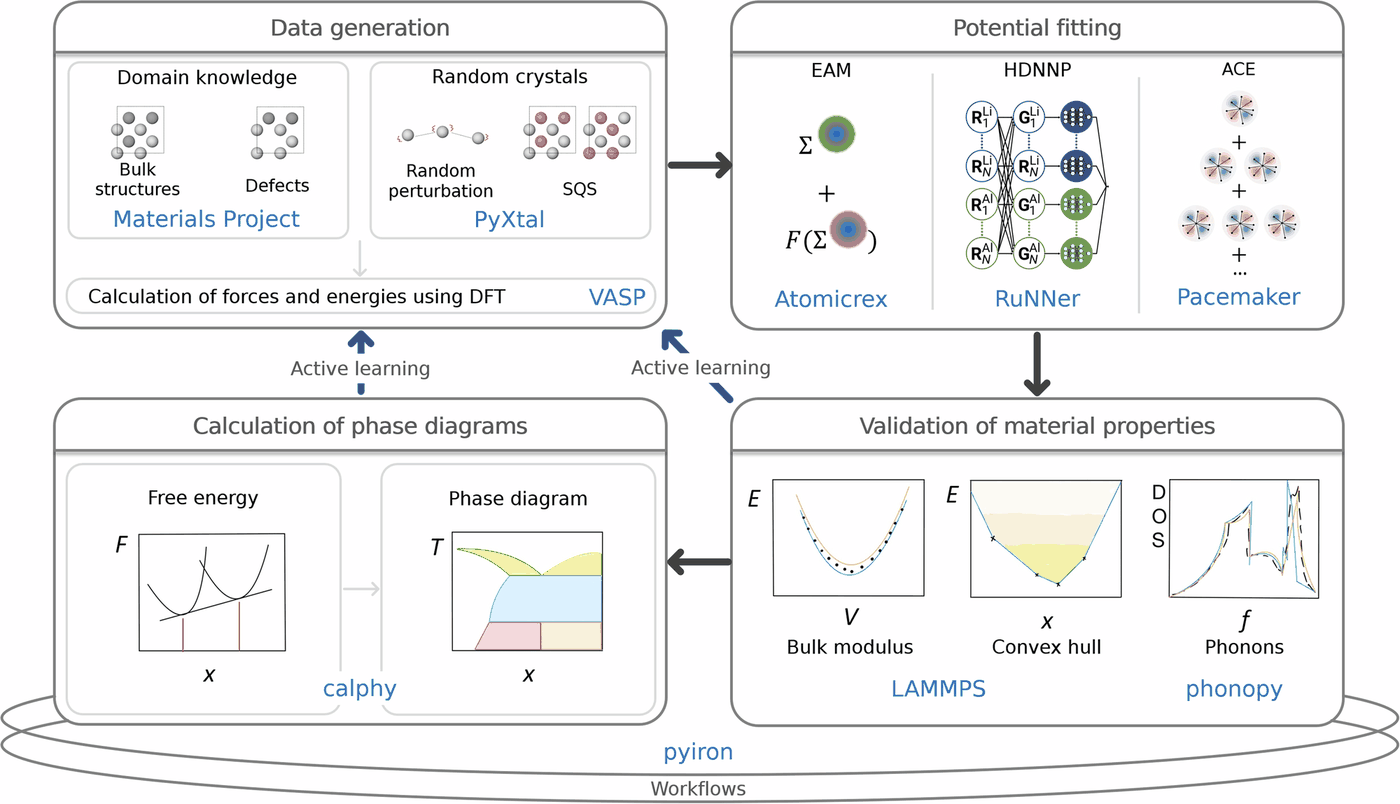
Whether a material is stable, how it transforms with temperature and how defects affect its properties is governed by free energies. Computing them from first principles requires density functional theory, statistical mechanics and careful sampling of vibrational, electronic and configurational contributions.
We develop automated approaches for finite-temperature properties – from melting temperatures of elemental crystals to complete composition–temperature phase diagrams – and quantify the numerical precision of the underlying electronic-structure calculations.
- Phase stability
- Free energies
- Defects
- Finite temperature
- DFT
Related publications
Machine learning for materials
From machine-learning fundamentals to predictive atomistic models.
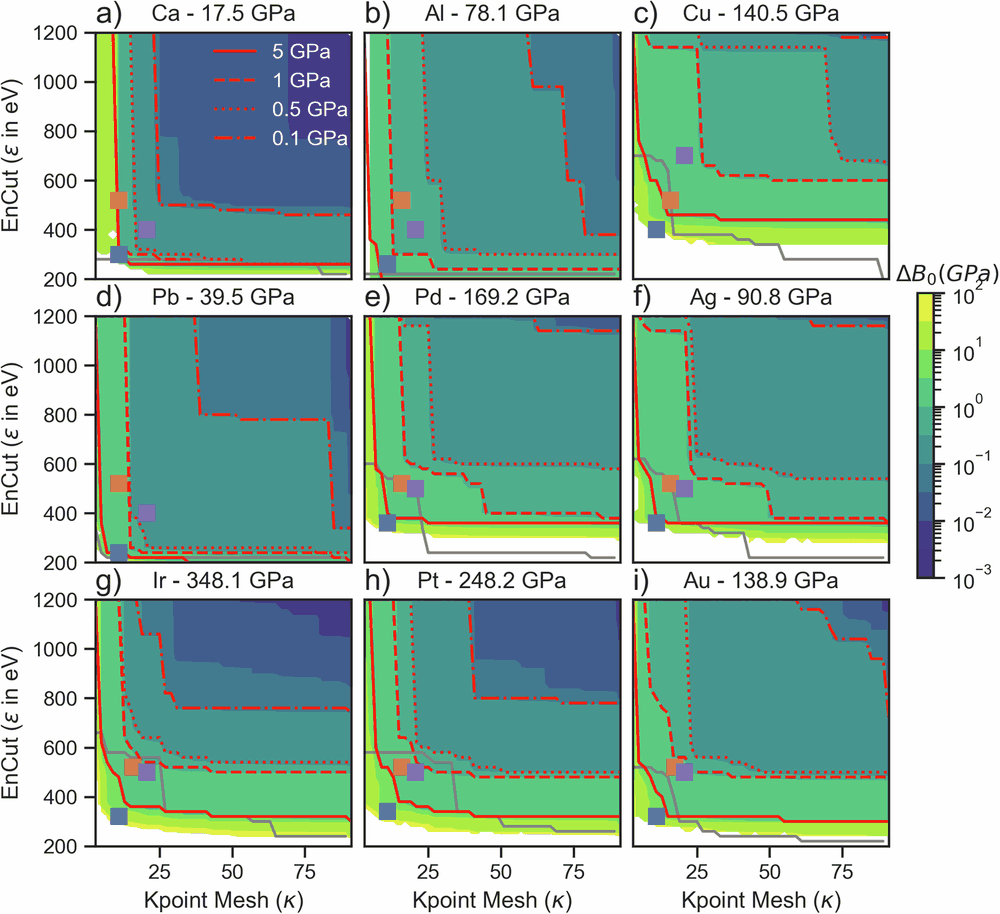
Machine-learned interatomic potentials bring near-DFT accuracy to length and time scales that are inaccessible to electronic-structure methods. Their predictive power depends on the training data, the model's expressivity and the precision of the reference calculations – trade-offs that we analyse systematically.
Beyond potentials, we use Bayesian and statistical methods, such as (deep) Gaussian processes and batch Bayesian optimisation, to explore complex chemical spaces like high-entropy alloys with quantified uncertainty and to decide which calculation or experiment is most informative next.
- Interatomic potentials
- Active learning
- Bayesian optimisation
- Uncertainty
- Materials discovery
Related publications
Scientific workflows & HPC
From Python functions to reproducible simulations on supercomputers.
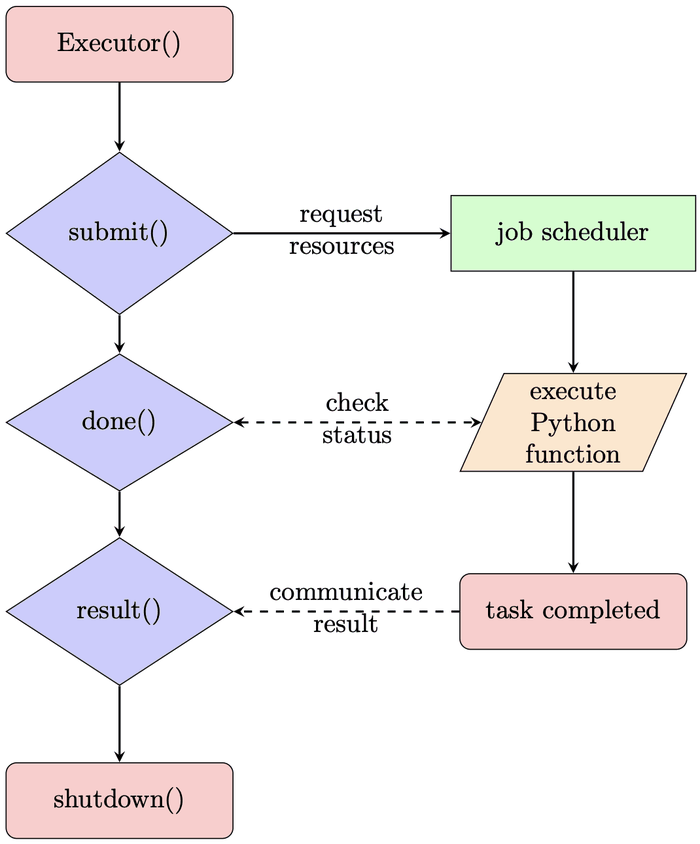
Modern simulation studies combine many codes, thousands of calculations and heterogeneous computing resources. We develop the open-source infrastructure that makes this manageable: the pyiron framework, scalable execution of Python functions on HPC systems with executorlib and pysqa, and the Python Workflow Definition for exchanging workflows between workflow managers.
Provenance, interoperability and semantic annotation make workflows reusable scientific objects – connecting simulation with experiments, data platforms and knowledge graphs.
- pyiron
- Provenance
- Interoperability
- HPC
- Knowledge graphs
Related publications
AI for science
From language models to autonomous scientific workflows.
Large language models can translate a scientific question into a sequence of simulation steps – but only if they are coupled to validated tools rather than generating results themselves. We develop agents that use established simulation codes and workflow frameworks, so that every number an agent reports is backed by a reproducible calculation.
Digital, well-annotated workflows are the prerequisite: they make simulation protocols machine-actionable and prepare materials science data for AI.
- LLM agents
- LangSim
- Autonomous workflows
- AI readiness
Related publications
Interested in one of these themes?
Student projects are connected to ongoing research in all four themes and adapted to your background.