Computational thermodynamics
From thermodynamics and statistical mechanics to predictive materials modelling.
Phase stability, free energies, defects and finite-temperature properties from first principles.
Janssen Lab · Materials Informatics
Apply what you learn at Ruhr University Bochum to current research questions in computational materials science and materials informatics.
The Materials Informatics group at the Max Planck Institute for Sustainable Materials (MPI SusMat) develops computational methods that connect atomistic simulation, thermodynamics, machine learning, scientific workflows, high-performance computing and AI – to make the discovery of sustainable materials predictive, reproducible and scalable.
Learn → Apply → Research
The methods taught in lectures are the same methods used to answer open questions in materials science. Each step builds on the previous one.
Step 1
Build foundations through lectures and open teaching material.
Programming · Thermodynamics · DFT · Atomistic simulation · Machine learning
Step 2
Use modern computational tools to turn theoretical knowledge into quantitative materials predictions.
Python · pyiron · Interatomic potentials · HPC · Scientific workflows
Step 3
Use these methods to investigate open scientific questions.
Phase stability · Uncertainty · Materials discovery · Autonomous workflows
Research
From thermodynamics and statistical mechanics to predictive materials modelling.
Phase stability, free energies, defects and finite-temperature properties from first principles.
From machine-learning fundamentals to predictive atomistic models.
Machine-learned interatomic potentials, Bayesian methods and uncertainty quantification for materials discovery.
From Python functions to reproducible simulations on supercomputers.
pyiron, scalable execution, provenance and interoperable workflow definitions.
From language models to autonomous scientific workflows.
Agents that combine large language models with validated simulation tools.
Your studies and our research
Many topics from Bachelor and Master courses lead directly into current research questions.
| If you enjoy or know … | … you could work on |
|---|---|
| Thermodynamics | Free energies, phase stability, defects |
| Atomistic simulation | Density functional theory, molecular dynamics, machine-learned interatomic potentials |
| Python programming | Scientific workflows, pyiron, research software |
| Machine learning | Interatomic potentials, Bayesian optimisation, uncertainty quantification |
| High-performance computing | Parallel execution and workflow infrastructure |
| AI and large language models | Agentic scientific workflows |
These are starting points, not prerequisites. Nobody is expected to know all of these topics – projects are matched to your background, your interests and the scientific question.
Recent research
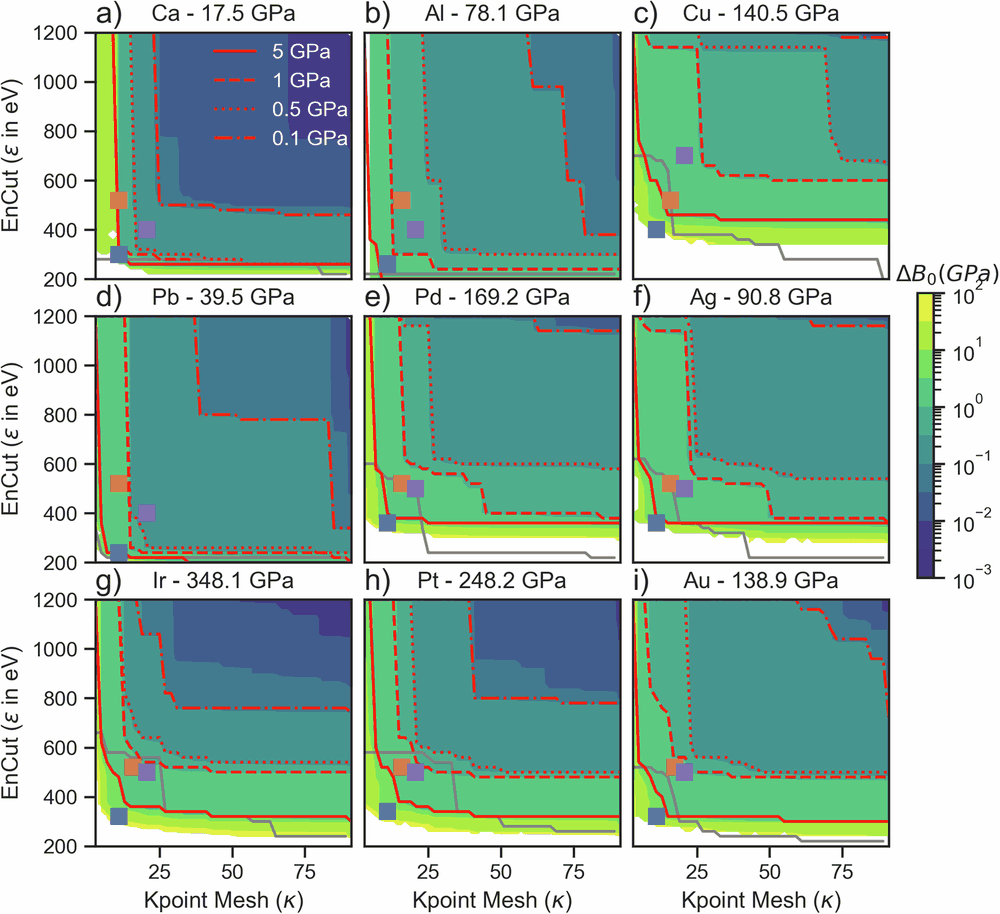
Instead of choosing convergence parameters by hand, the user specifies the precision they need. Uncertainty quantification then identifies the energy cutoff and k-point sampling that achieve it, tested on a large set of elements.
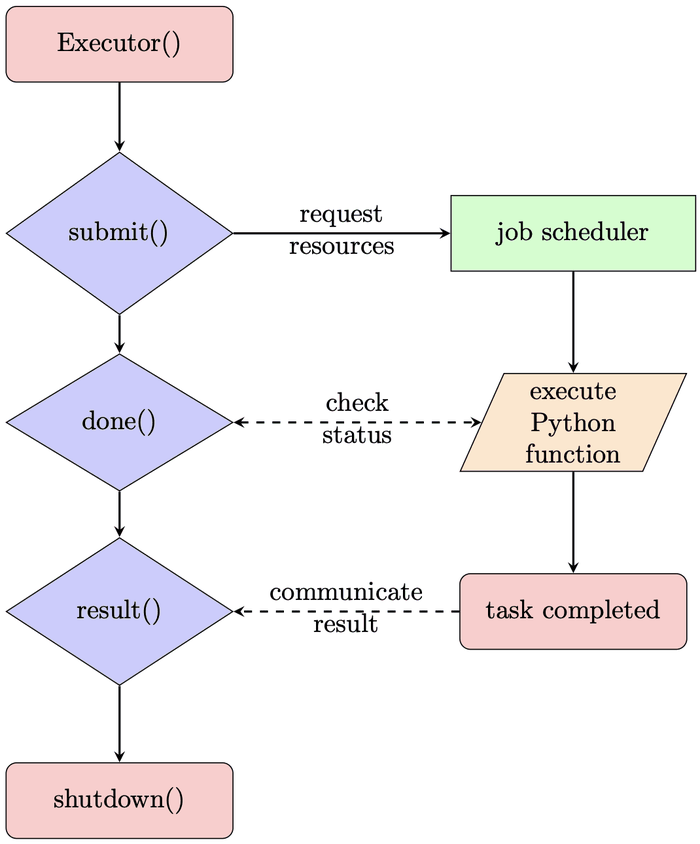
executorlib extends the familiar Python Executor interface to HPC job schedulers such as SLURM and flux, so the same scientific code runs on a laptop and on a supercomputer.
The Python Workflow Definition is an exchange format that allows the same computational workflow to be shared between the workflow management systems AiiDA, jobflow and pyiron – a step towards reproducible, interoperable simulation protocols.
A community review of 32 projects – including LangSim, which couples LLM agents to atomistic simulation codes – shows how language models are being used for property prediction, automation, data management and agentic workflows in materials science and chemistry.
Open-source software
Software is a research output of the group. Students interested in scientific programming can contribute to these projects as part of a computational research project.
Interested in a Bachelor project, a Master thesis or another research project? You do not need a complete proposal – a short email is enough to start a conversation.
Or write directly to jan.janssen@rub.de